

The Hardest Part of Agentic AI Isn't Intelligence. It's Plumbing.
- The hardest problem in agentic AI right now is not making the model smart enough. It is connecting a capable model to the messy systems it has to touch, and that connective work is where most projects quietly die.
- First Page Sage's 2026 data found that 26 percent of failed agentic AI projects blame integration with legacy systems, and the average project collapses 6 to 10 months in, long after the impressive demo.
- McKinsey reports that nearly two-thirds of organizations name security and risk as the top barrier to scaling agents, while Gartner expects 40 percent of agentic projects to be scrapped by 2027 on poor risk management and unclear ROI.
- The unglamorous layer, authentication, state, rate limits, and error handling, is the actual product. An agent that cannot log in, remember what it did, or fail safely is a liability no matter how clever it sounds.
- A standard is forming around this: 73 percent of enterprise developers now prefer Anthropic's Model Context Protocol for connecting agents to tools, even as some teams argue plain API calls are still the saner default.
I have watched more agentic AI projects stall over a broken login than over anything the model got wrong. The intelligence is genuinely impressive now. You can hand a modern agent a fuzzy goal and watch it reason through steps that would have been science fiction in 2020. Then you ask it to actually do the thing inside your business, and it hits the same wall every time: your systems. The CRM with the API from 2014, the auth flow nobody documented, the database that answers in half a second on Tuesdays and times out on Fridays. That wall is not an intelligence problem. It is plumbing, and plumbing is where the real work of this era lives.

Intelligence Was The Easy Part
The models got good faster than our systems got ready for them, which is why capability is no longer the bottleneck. For most business tasks, the reasoning is solved well enough. The gap between a flashy proof of concept and something that runs on Monday morning is almost never the model. It is everything the model has to reach through to get its job done.
The failure data makes this concrete. First Page Sage's 2026 analysis found that 26 percent of abandoned agentic AI projects cite integration with legacy systems as a primary cause, and the same report notes these projects tend to die 6 to 10 months in, according to First Page Sage's adoption research. That timing tells the whole story. Six months is long enough to clear the demo, win the budget, and start wiring the agent into real systems, which is exactly when the plumbing bill comes due. Unclear ROI kills even more of them, 43 percent, but ROI stays unclear precisely because the thing never got reliably connected to anything that mattered. The demand is not the issue either. Protiviti found that more than 68 percent of organizations expect to have agents integrated into operations by the end of 2026. Wanting them is easy. Wiring them is not.
Where Agents Meet Your Stack
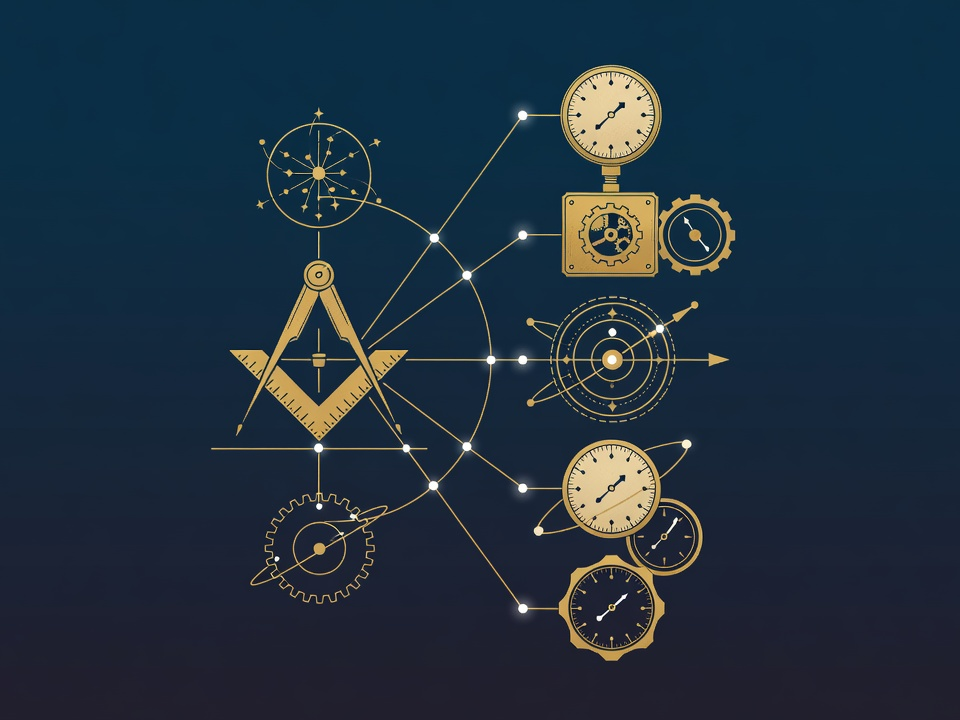
An agent creates business value only at the exact points where it touches your existing software, and those contact points are almost always the weakest part of the design. A model reasoning in isolation is a very expensive chatbot. The value shows up when it reads a record, updates a ticket, sends the invoice, or kicks off the next step in a workflow, which means every unit of value rides on a connection to a system that was not built with agents in mind.
This is the part the market keeps underestimating. PwC put it bluntly in its AI agent survey: few businesses "are connecting agents across workflows and functions, yet that's where the real value lies." I would go further. The connection is not a step toward the value. The connection is the value. Legacy systems make this hard in ways that have nothing to do with AI: APIs that predate REST conventions, data models that contradict each other across departments, and records that are technically present but too inconsistent for an agent to trust. That is the same readiness problem I laid out in why your data is only an asset if an agent can read it. A brilliant agent pointed at unreadable systems is just a faster way to reach a dead end.

Auth, State, And The Boring Stuff
The three problems that actually break production agents are authentication, state, and error handling, and none of them are glamorous enough to make the keynote. This is the layer that separates a demo from a system you can leave running, and it is exactly the layer teams skip when they are racing to show something impressive.
Start with authentication, because an agent that acts on your behalf needs credentials, and credentials are power. A human clicks a login once a day. An agent might make hundreds of calls an hour, each one needing a valid token, the right scope, and a permission set narrow enough that a confused agent cannot do real damage. Get this wrong and you have either an agent that constantly locks itself out or one with the keys to everything, and McKinsey's 2026 research shows why that matters: nearly two-thirds of organizations name security and risk as the top barrier to scaling agents, and only about a third have mature controls. Then there is state. A real task spans many steps, and the agent has to remember what it already did so a retry does not send the same wire transfer twice. That means idempotency, checkpoints, and a durable record of progress, none of which the model gives you for free. Finally, error handling. Systems fail: rate limits trip, tokens expire, a service returns nonsense. A production agent needs retries with backoff, a way to fail safe instead of guessing, and an audit log so you can see what it tried. This is the discipline behind designing a custom agent your team will actually use, and it is the least discussed and most decisive part of the build.

MCP And The Standardization Push
The industry's answer to integration sprawl is a shared standard, and right now that standard is Anthropic's Model Context Protocol. MCP gives an agent a consistent way to discover and call tools and data sources, so you stop writing a bespoke, one-off integration for every single system the agent needs to reach. Instead of fifty custom connectors, you expose systems through a common interface the agent already knows how to speak.
The momentum is real. DigitalApplied's 2026 figures show 73 percent of enterprise developers naming MCP their preferred connectivity standard and 89 percent of new enterprise agent projects planning to build on it. That is fast for a protocol that barely existed two years ago, and it points at a genuine pain: everyone is tired of rebuilding the same plumbing. But standardization has skeptics worth hearing. Firecrawl's 2026 trends piece notes that more teams are "moving away from MCPs entirely, opting for direct API calls and CLIs instead," because for a small, well-understood set of systems a direct call is simpler to secure and reason about than another abstraction layer. Both things are true. MCP earns its keep when you are connecting many systems and want reuse and consistency. For a handful of stable integrations, plain API calls will often get you there faster. The protocol is a tool, not a religion, and the buy-versus-build instinct here is the same one I walked through in off-the-shelf versus custom agents.
Building Plumbing That Doesn't Leak
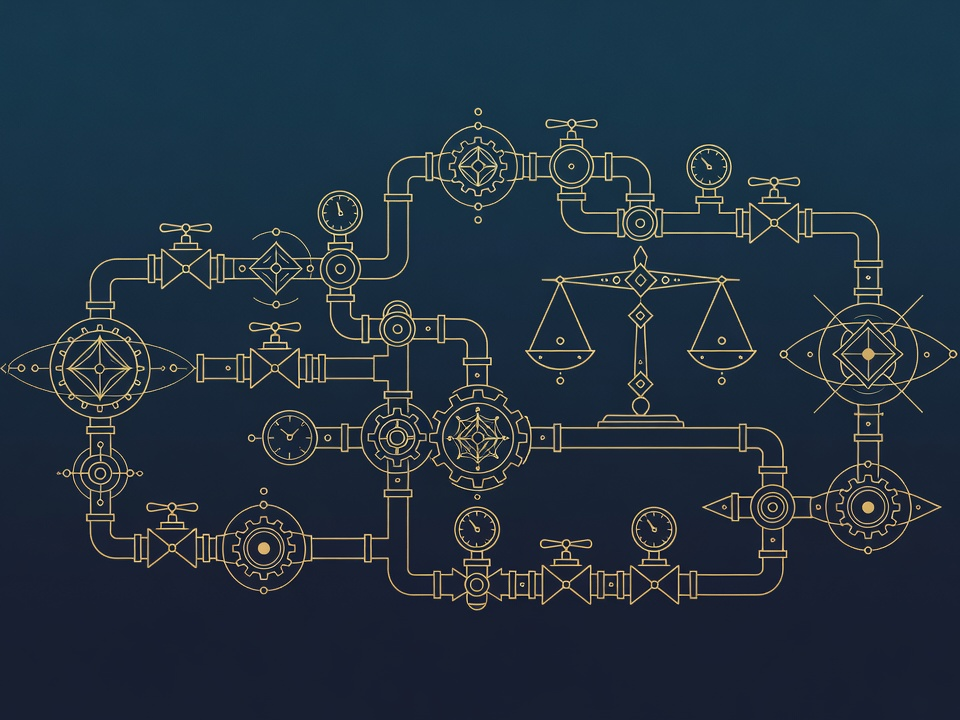
You build a reliable agent by treating the connective layer as the product, not the afterthought, and by earning trust one system at a time. The teams that succeed do the unglamorous work up front: they scope permissions tightly, make every action idempotent, log everything, and design for the failure cases before the happy path. The teams that fail wire the agent to production in a weekend and find out in month seven why that was optimistic.
A few principles hold up. Give the agent the narrowest access that lets it do its job, using a dedicated service account, never a human's all-powerful login. Make actions safe to repeat, so a retry never doubles an order. Keep a human in the loop on anything irreversible until the agent has earned its range, the same graduated-autonomy logic behind autonomous agents, where they help and where they hurt. And instrument the whole thing so that when something breaks, and it will, you can see exactly what the agent did and why. This is careful engineering against messy reality, which is precisely the work we do at Automata Intel. If you are staring at a promising agent that cannot quite touch your real systems safely, that is the gap to close first, and a System Review Diagnostic is a direct way to find where your plumbing leaks before you pour more budget into the model. Intelligence was the easy part. The plumbing is the job.

Frequently Asked Questions
Why Is Integrating AI Agents With Existing Systems So Difficult?
Legacy applications were never designed for autonomous software acting on their behalf. They often lack modern APIs, hold siloed or inconsistent data, and offer none of the authentication scoping, state tracking, and observability a reliable agent needs. The intelligence of the model does not help here; the difficulty lives entirely in the connection between the agent and systems that predate it.
What Is The Model Context Protocol (MCP)?
MCP is an open standard, originated by Anthropic, that gives AI agents a consistent way to discover and call tools and data sources. Instead of writing a custom integration for every system, you expose systems through a shared interface the agent already understands, which cuts repeated plumbing work as the number of connected systems grows.
What Are The Biggest Challenges Of Deploying Agentic AI In Production?
The recurring killers are integration with legacy systems, securing agent access and permissions, managing state across multi-step tasks, and proving ROI. First Page Sage found integration behind 26 percent of failed projects and unclear ROI behind 43 percent, and most of these failures surface six to ten months in, once the agent meets real systems rather than a demo environment.
How Do AI Agents Connect To Existing Software?
Agents connect through APIs, webhooks, and connector layers, or through an open protocol like MCP, wrapped in the operational scaffolding that makes those calls safe. That scaffolding includes authentication and token refresh, rate-limit handling, retries with backoff, and idempotency so repeated actions do not cause damage. The raw connection is the easy 20 percent; the safety scaffolding is the hard 80 percent.
Do I Need MCP To Build An AI Agent?
No. MCP standardizes tool access and saves real integration effort when you are connecting many systems, but plenty of teams move faster with direct API calls for a small, well-understood set of integrations. Treat MCP as a tool that pays off at scale, not a requirement, and choose based on how many systems you need to reach and how much reuse you expect.
References
- First Page Sage: Agentic AI Adoption Statistics for 2026
- McKinsey: State of AI Trust in 2026, Shifting to the Agentic Era
- Gartner projection via Landbase: Agentic AI Statistics
- DigitalApplied: Agentic AI Statistics 2026
- PwC: AI Agent Survey
- Firecrawl: Top Agentic AI Trends to Watch in 2026
- Protiviti via PR Newswire: 68% Expect Integrated AI Agents by 2026