

Turning Your Company's Documents Into a Brain an Agent Can Use
- Building a knowledge base for AI is less about buying a vector database and more about deciding what your company actually knows and can vouch for. The raw material is already here: more than 80% of enterprise data is unstructured, sitting in documents, threads, and PDFs (Typedef).
- Most of it never gets used. IDC found that roughly 99% of enterprise data goes untapped for AI, mostly because nobody made it retrievable (IDC).
- Ingest the authoritative and current, skip the duplicates and drafts. Retrieval quality follows input quality, and the failure is quiet: a bad chunk retrieves just as confidently as a good one.
- Structure matters more than model choice. Plain recursive chunking hits 85 to 90% retrieval recall, and the fancier semantic version only reaches 91 to 92% (Firecrawl), so you get most of the win from getting the basics right.
- Freshness is where these projects die. An estimated 60% of enterprise RAG projects fail because they cannot keep the knowledge base current at scale (RAG About It). Treat documents as having a shelf life, and measure whether the answers are still right.
Every company I talk to is sitting on a decade of institutional knowledge and treating it like clutter. It is in the shared drive, the wiki nobody updates, the email thread where someone finally explained how the billing exception works. The dream is to point an agent at all of it and get a colleague who has read everything and forgets nothing. The reality, when people rush it, is an agent that answers with yesterday's pricing in a confident voice. This is a practical guide to building a knowledge base for AI out of the documents you already own: what to feed it, how to organize it so retrieval works, and how to keep it from rotting the week after you launch.
The Documents You're Already Sitting On
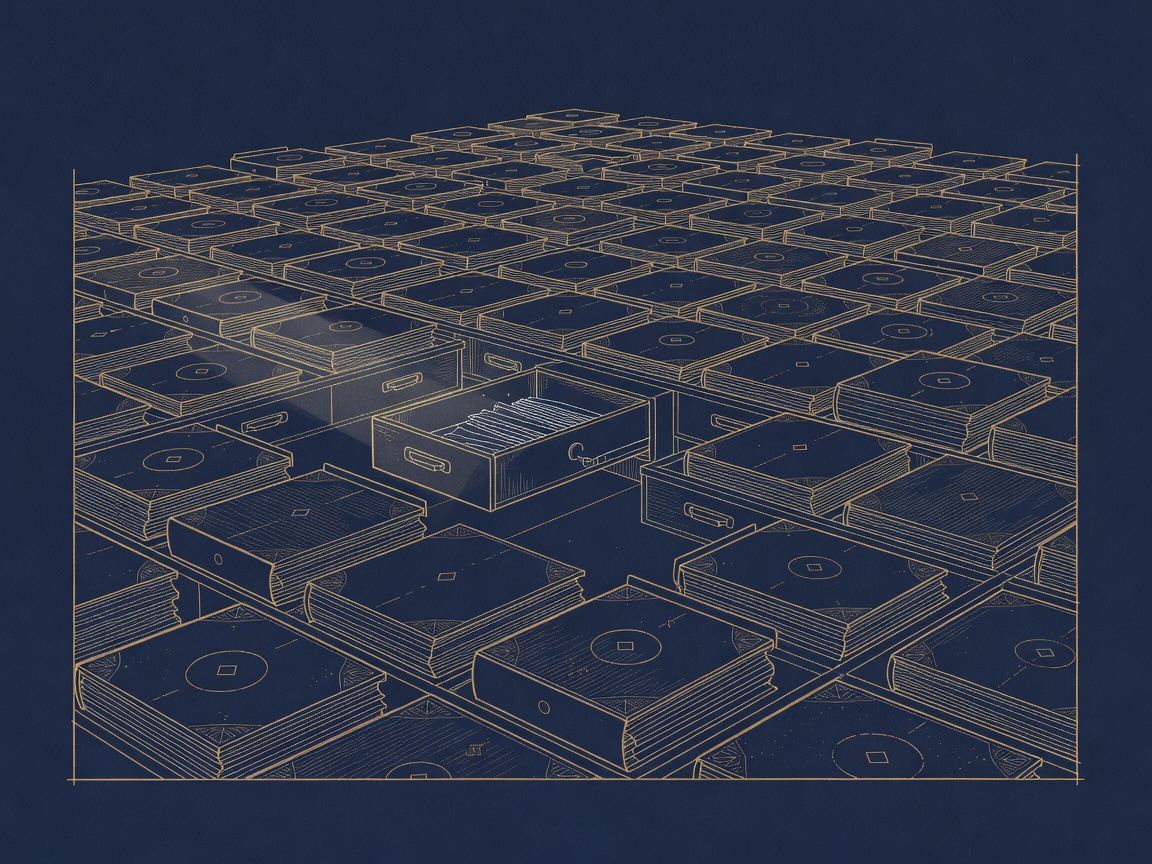
You do not have a content problem, you have a retrieval problem. The knowledge is already written down somewhere. What is missing is a way for a machine to find the right paragraph at the right moment. That gap is enormous and largely invisible: IDC's 2025 research puts the share of enterprise data that goes untapped for AI at about 99%, and more than 80% of everything a company stores is unstructured text that no query can reach cleanly (Typedef). The material exists. It is just illegible to software.
The mechanism that fixes this is retrieval-augmented generation, or RAG, and it has quietly become the default. Roughly 85% of enterprise AI applications now use RAG as their core architecture, up from about 40% two years ago (LargitData). The idea is simple: before the model answers, it goes and reads the relevant passages from your own documents and uses them as context, rather than guessing from training memory. The agent stops being a know-it-all and becomes a fast reader of your specific material. I made the broader case for this in Your Data Is Only an Asset If an Agent Can Read It, and the point holds here: the asset is not the documents, it is the readability.

What to Ingest and What to Skip
Ingest the material you would defend in a meeting, and skip everything you would not. This is the single most consequential decision in the whole build, and it is a curation call, not a technical one. The old line about "garbage in, garbage out" was practically written for this moment. As the RAGFlow team put it, no matter how excellent the model, "if the input context is inaccurate or fragmented, the quality of the output will not improve. If you want to improve response quality, first improve the quality of the context" (RAGFlow).
In practice that means feeding the current, authoritative, decision-driving documents: approved policies, live product documentation, playbooks, the answers your best people already give. It means leaving out the noise: duplicate copies, superseded versions, half-finished drafts, and anything you cannot vouch for. A retrieved chunk carries no warning label. A pricing sheet from three reorganizations ago will surface next to the current one with identical confidence, and the model has no way to know which is real. Every duplicate and dead draft you ingest is a landmine you are choosing to bury in your own field. If your source material is a mess to begin with, that is a separate project with its own bill, one I walked through in Your AI Project Is a Data Cleanup Project in Disguise.

Structuring the Knowledge Base for AI Retrieval
Structure is where a knowledge base for AI is won or lost, and the good news is the winning move is unglamorous. Documents get split into chunks, each chunk gets turned into an embedding (a numeric fingerprint of its meaning), and those get stored in a vector database so an agent can search by meaning instead of keywords. The tempting instinct is to reach for the most sophisticated chunking method available. The data says do not bother, at least not first. Plain recursive chunking at around 400 tokens delivers 85 to 90% retrieval recall, while the far more expensive semantic approach only climbs to 91 to 92% (Firecrawl).
There is even a contrarian finding worth keeping in your pocket. A NAACL 2025 paper concluded that the computational cost of semantic chunking is not justified by consistent gains, with fixed word-count chunks matching or beating it across retrieval tasks. Start simple, measure, and only add complexity where your numbers demand it.
The bigger win is metadata. Tag every chunk with its source, its owner, its creation date, and its type, then let the system filter on those tags before it ever runs a similarity search. This narrows the search space and lifts both speed and accuracy, and research on metadata-driven retrieval shows it consistently outperforms content-only approaches (Unstructured). Metadata is also what makes the next problem, freshness, solvable at all.

Keeping the Knowledge Base Fresh
Freshness is the failure mode nobody plans for and almost everybody hits. The reason it is so dangerous is that stale answers look exactly like good ones. As one production write-up on the freshness paradox explained, "semantic similarity does not care about time. A document written eighteen months ago about your company's pricing model will retrieve just fine when a user asks about current pricing, because the embeddings have no concept of shelf life" (RAG About It). The system is not broken. It is confidently wrong, which is worse.
This is not a rare edge case. An estimated 60% of enterprise RAG projects fail not on retrieval quality or hallucination but on the plain inability to keep the knowledge base current as it grows (RAG About It). The fix is to treat every document as having an expiration date. Store creation and last-verified timestamps as metadata, re-index on a schedule so new and edited documents actually reach the index, and retire superseded content instead of letting it linger. Freshness stops being a cleanup you do once and becomes a metric you watch, the same way you would watch uptime. Skip it and you have built a very sophisticated way to be out of date.

Measuring Whether the Answers Are Right
You cannot trust a knowledge base you have not tested, and "it seemed fine in the demo" is not a test. The whole point of retrieval is accuracy, so accuracy is the thing to measure, deliberately and on a schedule. Build a small evaluation set of real questions your team actually asks, with known-good answers, and grade the system against it every time you change something. This is the same discipline that separates a working agent from a demo, a theme I keep returning to because it keeps being the difference that matters.
Grade two things separately. First, retrieval: did the system pull the right chunks for the question? If the correct passage never surfaces, no model on earth can save the answer. Second, generation: given the right chunks, did the answer actually use them and stay faithful? Segment those scores by topic and by stakes, and hold the high-consequence questions, the ones about money, contracts, or compliance, to a much higher bar than the routine ones. Gartner projects that organizations will abandon 60% of AI projects that are not supported by AI-ready data through 2026 (Gartner, via Techment), and most of those abandonments are really measurement failures wearing a data costume. If you know what "right" looks like and you check for it, you are already ahead of the field. If your data is not there yet, the honest signs are worth reading first, which is why I wrote Five Signs Your Data Isn't Ready for AI.
Frequently Asked Questions
What Is Retrieval-Augmented Generation?
Retrieval-augmented generation, or RAG, is a pattern where an AI model retrieves relevant passages from your own document store before it answers, then writes its response using those passages as context. The model is not guessing from training memory. It is reading your specific material and answering from it, which is what makes it useful for company-specific questions.
What Is a Vector Database?
A vector database stores documents as numeric embeddings, which are fingerprints of meaning, so they can be searched by concept rather than exact keywords. When an agent asks a question, the database finds the chunks whose meaning sits closest to the question. It is the retrieval engine underneath most knowledge bases for AI.
How Do You Build a Knowledge Base for AI?
Gather the authoritative documents you already have, clean and deduplicate them, split them into retrieval-sized chunks, attach metadata like source, owner, and date, then embed them into a vector store. The step people skip is the last one: put a freshness and measurement process around it so the knowledge base does not quietly rot after launch.
What Documents Should You Ingest for RAG?
Ingest the current, authoritative, decision-driving material: policies, product docs, playbooks, and the approved answers your best people already give. Skip duplicates, drafts, superseded versions, and anything you cannot personally vouch for. Noise in the corpus lowers retrieval quality, and a bad chunk retrieves with the same confidence as a good one.
How Do You Keep an AI Knowledge Base Current?
Treat every document as having a shelf life. Store creation and last-verified dates as metadata, re-index on a schedule so edits actually reach the index, retire content that has been replaced, and monitor freshness as an ongoing operational metric rather than a one-time cleanup. Stale answers look identical to correct ones, so the only defense is active maintenance.
References
- Typedef, Unstructured Data Management Statistics
- IDC 2025: 99% of Enterprise Data Untapped for AI
- LargitData, Enterprise AI Knowledge Management: Complete RAG Guide 2025
- Firecrawl, Best Chunking Strategies for RAG
- Unstructured, Metadata for RAG: Improve Contextual Retrieval
- RAG About It, The RAG Freshness Paradox
- RAG About It, The Knowledge Decay Problem
- RAGFlow, Solving Garbage In, Garbage Out
- Techment, Data Quality for AI 2026 Enterprise Guide
- Your Data Is Only an Asset If an Agent Can Read It
- Your AI Project Is a Data Cleanup Project in Disguise
- Five Signs Your Data Isn't Ready for AI