

Shadow AI Is Already in Your Company. Here's How to Govern It
- Shadow AI governance starts from an uncomfortable fact: your people are already pasting company data into consumer AI tools, and 83% of employees at mid-sized and large organizations were using generative AI for work by mid-2025 while only 24% had a clear policy covering it.
- Bans do not stop the behavior. They hide it. Blocked tools move to personal phones and home laptops, where you have zero visibility and zero control.
- The work is discovery first: find which tools people actually use and what data is flowing to them, using telemetry about tools and traffic rather than reading anyone's individual prompts.
- Sanction a good-enough enterprise option and make it easier than the consumer version. One firm's telemetry showed a 40 to 60% drop in shadow AI within six months once the approved tool beat the alternatives on convenience.
- Then set a short list of guardrails people can actually remember, and write a policy that fits on one page. Governance that nobody reads governs nothing.
Shadow AI is the AI use happening inside your company that you did not approve and mostly cannot see. Governing it is less about control and more about catching up to reality, because the reality is already here. Someone in finance is cleaning up a board deck in ChatGPT right now. Someone in support is drafting replies with a browser extension you have never heard of. Shadow AI governance is the practice of surfacing that activity, moving it onto tools you can stand behind, and setting rules that protect data without pretending the behavior will stop. The Cloud Security Alliance found that 83% of employees were already using generative AI for work by mid-2025, while just 24% reported a clear governing policy, according to Cloud Security Alliance. That gap, not the technology, is the problem.
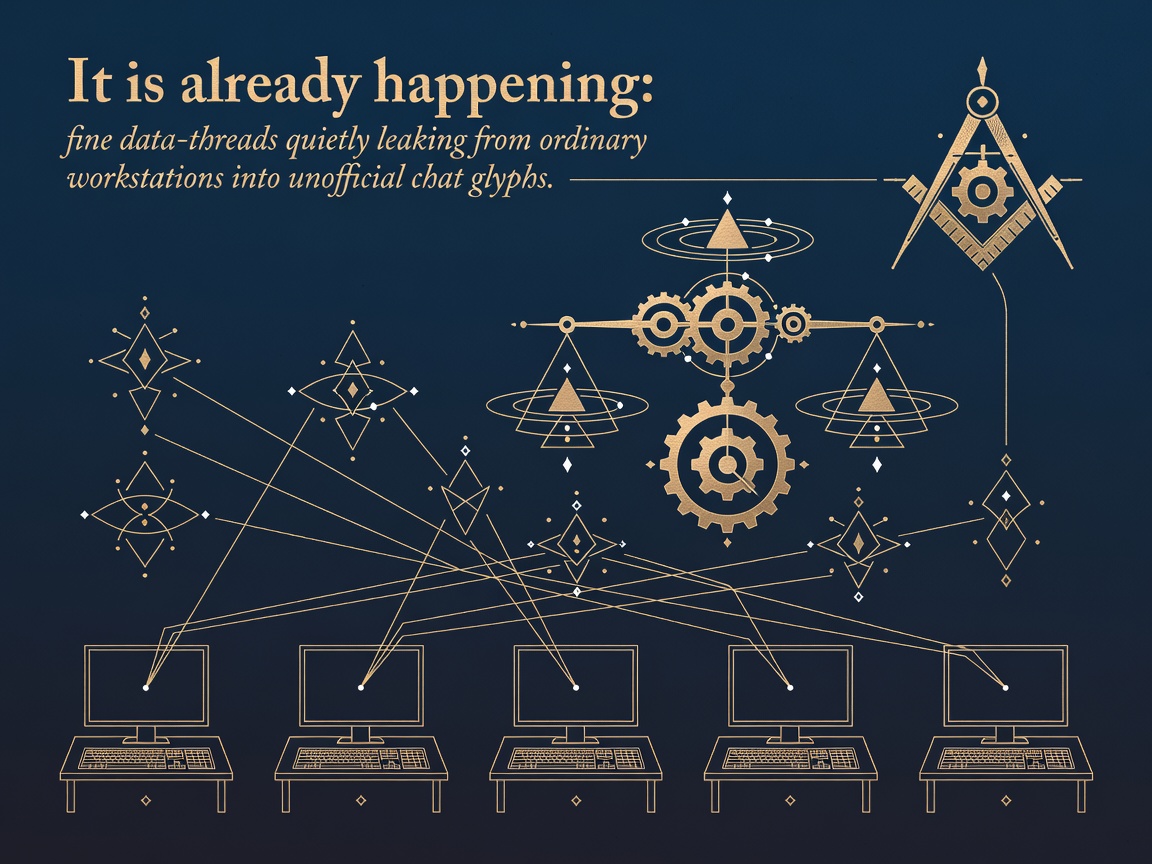
It Is Already Happening
Assume the usage is happening, because the data says it is. The interesting question is not whether your team uses unsanctioned AI. It is how much sensitive material is riding along with it. Cyberhaven's analysis of real corporate traffic found that 9.6% of all data sent to public generative AI tools contained sensitive or regulated information, with source code and customer data making up more than half of those incidents, per Cyberhaven. That is not a rounding error. That is your crown jewels going out the door one helpful prompt at a time.
The scale surprises leaders because shadow AI does not look like a breach. There is no alarm, no ransom note, no locked screen. There is just a marketer summarizing a contract, a developer asking a chatbot to debug a snippet that happens to contain an API key, an analyst uploading a spreadsheet of customer records to "find the trend." Each act feels small and reasonable. In aggregate they add up to an ungoverned data pipeline running out of your building. A 2025 Zylo survey found that 61% of IT and finance leaders had discovered at least one unsanctioned AI application in the past year, and 42% said shadow AI had already raised their security or compliance risk in a measurable way, according to Zylo.
Agents make this worse, because they act rather than just answer. Google Cloud's research on enterprise AI found that unapproved "shadow" agents accounted for nearly 30% of automated workflows touching production data before any formal governance existed, per Google Cloud. A chatbot leaks what a person hands it. An agent with credentials can move data on its own, on a schedule, without anyone watching. The window to get ahead of that is now, while most of the activity is still humans typing into text boxes.
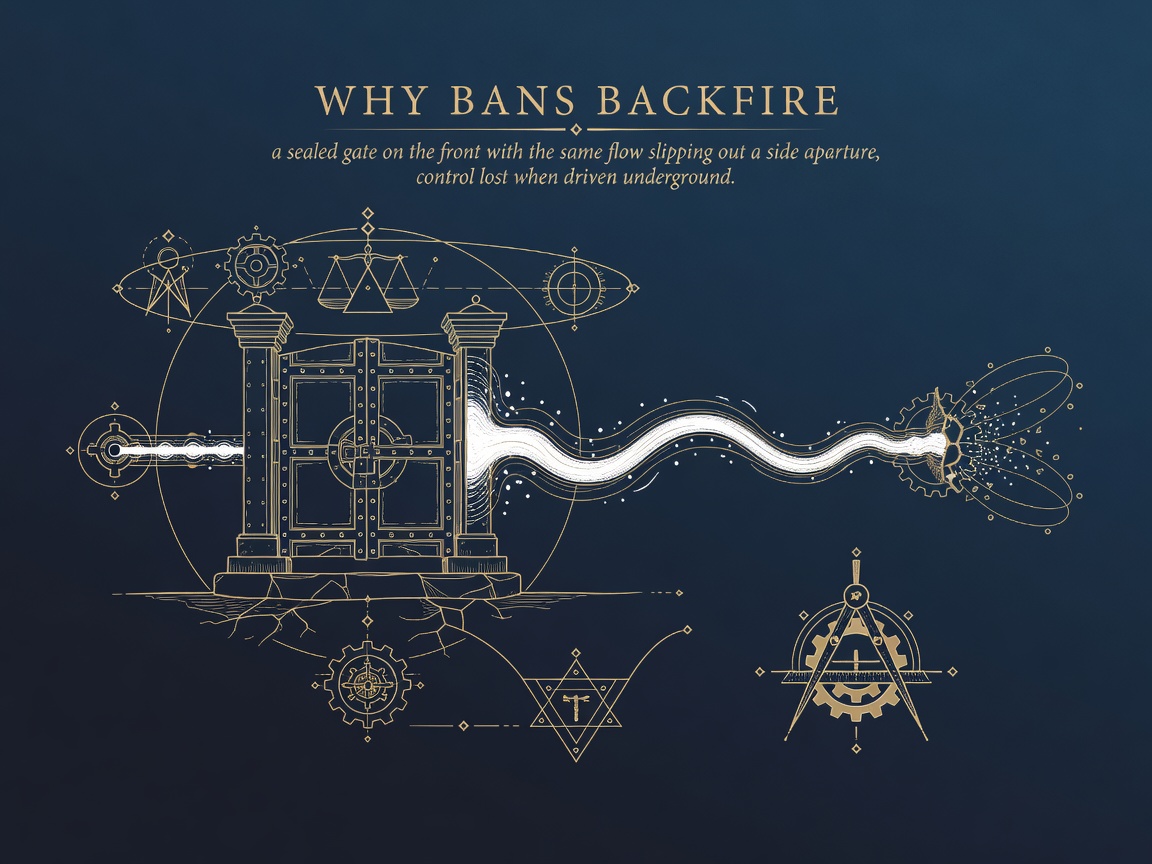
Why Bans Backfire
Banning consumer AI feels decisive and accomplishes the opposite of what you want. The logic is seductive: the tools are risky, so block them, and the risk goes away. What actually happens is the risk goes dark. As AvePoint puts it, "Blanket bans push usage underground, where it becomes harder to detect and impossible to govern." When you block ChatGPT on the corporate network, you do not remove the incentive that put it there. That deadline is still due. So the work moves to a personal phone, a home laptop, or a copy-paste through a personal email account, and now the same sensitive data is flowing through channels you cannot see at all.
Bans also punish exactly the people you most want to keep. Your highest performers are the ones finding the productivity edge. Tell them the answer to a tool that makes them twice as fast is "no," with no alternative, and you have taught your best employees that the official policy is an obstacle to route around. That lesson generalizes. A rule that is obviously disconnected from how work gets done quietly discredits every other rule you have.
There is a narrow case for prohibition, and it is worth naming so the guardrails later feel proportionate rather than absolute. Specific data classes genuinely should never touch a public model: regulated health or financial records, unreleased financials, credentials, anything under a contractual confidentiality obligation. Prohibiting those categories is not a ban on AI. It is a ban on a handful of dangerous inputs, which is a very different and far more enforceable thing. The failure mode is prohibiting the tool instead of the risky behavior. Govern the behavior and you can keep the productivity. Prohibit the tool and you lose the visibility along with the trust.

Surfacing What People Actually Use
You cannot govern what you cannot see, so discovery comes before policy. The instinct here is to reach for surveillance, logging every prompt and keystroke, and that instinct is both creepy and unnecessary. The better signal lives one level up. You do not need to read what someone typed into a chatbot. You need to know which chatbots are in use and where company data is going. That is a traffic and inventory question, not a wiretap.
Three sources give you most of the picture without reading anyone's messages. Your single sign-on and SaaS management tools show which AI apps people have authenticated into with work accounts. Network and secure web gateway logs show which AI domains are seeing meaningful outbound traffic. Expense reports and app-store receipts show who is paying out of pocket for a Pro subscription, which is a strong tell that a tool is doing real work. Start there and you get a ranked list of the AI your organization actually relies on, which is the input every later step needs. The Cloud Security Alliance frames the goal plainly: "the priority now is to discover, inventory, and tier those systems so they can be governed, not wished away."
Frame the discovery as amnesty, not audit. The moment people believe surfacing a tool will get them in trouble, they hide it, and your inventory rots. I tell teams the opposite: if you show me the AI you use and what you use it for, that is how the good ones become official and get properly funded. That reframing, from gotcha to enablement, is what turns a one-time scan into a living inventory people keep current. It also answers the question employees are actually asking, which is not "am I allowed" but "will I get punished for being honest." Make honesty safe and the shadows shrink on their own.

Sanction, Enable, and Set Guardrails
The single most effective governance move is to make the safe path the easy path. People do not choose consumer AI because they crave risk. They choose it because it is right there, it works, and nothing better is offered. So offer something better. Sanction one enterprise-grade tool, ideally one with zero data retention terms and administrative controls, and then obsess over making it more convenient than the consumer version. K2 Integrity's client telemetry showed that once a single tool was formally sanctioned and made easier to use than the alternatives, organizations saw a 40 to 60% reduction in shadow AI usage within six months, with no bans involved, according to K2 Integrity. Convenience, not policy, did the work.
Enablement is the other half. A sanctioned tool nobody knows how to use loses to the consumer app every time. Run short, practical sessions on prompt hygiene, on what data classes are off limits, and on the specific workflows where the approved tool shines. Publish a two-line request path for new tools, so when someone finds a genuinely better option, the answer is a quick review rather than silence. Governance that only ever says no trains people to stop asking. Governance that says "here is the fast way to get a yes" keeps the inventory honest and the risky data out of the wrong tools. This is the same enablement-first posture I argued for in responsible AI without the compliance theater.
Then set guardrails short enough to remember. The practical set is small: never put regulated or confidential data into a public model, use the sanctioned tool with your work login for anything work-related, keep a human reviewing outputs that reach customers or touch compliance, and treat data classification as the one rule everyone memorizes. Pair the rules with lightweight controls where they matter most, following the same privacy-by-design thinking that keeps sensitive inputs from ever reaching a place they should not. Guardrails work when they are few, clear, and obviously reasonable. A twelve-page acceptable use policy is not a guardrail. It is a document that exists so someone can say it existed.
A Policy People Will Follow
A shadow AI policy earns compliance by being short, specific, and owned by someone. Most AI policies fail the same way: they are long, they are vague, and no single person is responsible for keeping them alive. Fix those three and adoption follows. The document itself should fit on one page. It names the sanctioned tools, lists the data classes that may never enter any AI system, and gives the one-line path to request something new. If it takes longer than two minutes to read, it will not be read, and an unread policy governs nothing.
Ownership is what keeps it real. As SentinelOne advises, "Your governance council should own a formal shadow AI policy that defines which AI tools are approved, which data types can never enter any AI system, and how employees request access to new tools." That ownership is cross-functional by nature. Legal or IT governance defines responsible use, security and IT implement and monitor the controls, a risk owner approves new tools, and HR or enablement handles training and reinforcement. Name real people for each, not departments, because a policy owned by "the organization" is owned by no one. The point of the council is not more meetings. It is a clear answer to "who decides" when a new tool or a new edge case shows up, which it will, constantly.
Treat the whole thing as a living program rather than a one-time project. New tools appear weekly, agents take on more autonomy, and the data flows shift as teams find new uses. Re-run discovery on a cadence, revisit the sanctioned list quarterly, and keep a simple incident path for when something goes wrong, so a bad output becomes a lesson instead of a cover-up. If you want a template for that decision-making structure, I laid one out in a governance framework people actually follow, and a companion approach to keeping the risk work honest in a risk assessment that isn't theater. Shadow AI is not a crisis to be stamped out. It is demand signal. Govern it well and the same energy that created the shadows becomes your fastest, safest path to getting real value out of AI.

Frequently Asked Questions
What Is Shadow AI and Why Is It a Governance Issue?
Shadow AI is the use of AI models and tools, often consumer services like ChatGPT, outside of formal IT approval. It becomes a governance issue because those systems operate beyond your established controls, creating blind spots for security, compliance, and data protection that you cannot manage until you can see them.
How Can Companies Detect Shadow AI Use Without Spying on Every Employee Prompt?
Focus on telemetry about tools and traffic rather than the contents of individual prompts. Single sign-on and SaaS discovery show which AI apps people log into, network and secure web gateway logs show where data is flowing, and expense reports reveal paid subscriptions. Together these surface the real inventory without reading anyone's messages.
Should Organizations Ban Public Generative AI Tools Like ChatGPT to Prevent Data Leakage?
In most cases, no. Blanket bans push usage onto personal devices where you have no visibility at all. The stronger move is to sanction a secure enterprise option, prohibit specific data classes from ever entering public tools, and train people on safe use so AI stays visible and governable instead of going underground.
What Are Practical Guardrails for Safe AI Use in Small and Mid-Sized Businesses?
Keep the list short: never put PII, trade secrets, or regulated records into public AI tools, require a work login for enterprise AI access, log AI interactions where it is feasible, and keep a human reviewing any output that reaches customers or affects compliance. A few clear rules people remember beat a long policy nobody reads.
Who Should Own Shadow AI Governance Inside an Organization?
Ownership is shared across functions. Legal or IT governance defines responsible use, security and IT teams build and monitor the controls, a risk or security leader approves new tools, and HR or enablement handles training and reinforcement. Name specific people for each role so there is always a clear answer to who decides.
References
- Cloud Security Alliance: The Invisible Enterprise, Shadow AI and the Ungoverned AI Estate
- Cyberhaven: Managing Shadow AI, Best Practices for Enterprise Security
- Zylo: Shadow AI, Causes, Consequences, and Best Practices for Managing AI Risk
- Google Cloud: These 4 AI Governance Tips Help Counter Shadow Agents
- K2 Integrity: Shadow AI Governance, How to Manage Hidden GenAI
- AvePoint: What Is Shadow AI and How Do You Govern It?
- SentinelOne: What Is Shadow AI? Definition, Risks and Governance
- A Governance Framework People Actually Follow
- A Risk Assessment That Isn't Theater
- Responsible AI Without the Compliance Theater
- AI Data Privacy Compliance, Privacy by Design